




From Static Plans to Dynamic Command: The AI Imperative in Construction Scheduling
In the construction industry, the project schedule has long been treated as the definitive source of truth. Yet for most mid-sized General Contractors, it functions more as a source of constant friction. The fundamental challenge is systemic: the static, document-based planning tools of the past are profoundly mismatched with the fluid, dynamic reality of a modern job site. This disconnect is not a minor inconvenience; it is a primary driver of margin erosion, resource underutilization, and a persistent drag on project velocity.
The reliance on these legacy systems creates a cycle of reactive problem-solving, turning highly skilled project managers into full-time firefighters. While a meticulously crafted Gantt chart provides an excellent snapshot of intent, it lacks the intelligence to adapt to the dozens of unforeseen variables that define any given workday. The challenge, therefore, is not to create a more perfect static plan, but to adopt a dynamic scheduling framework, one powered by Artificial Intelligence (AI), that anticipates and adapts to reality in real time.
Anatomy of a Common Schedule Failure
To understand the depth of this issue, consider a scenario that plays out daily on construction sites. A critical delivery of structural steel fails to arrive on schedule due to a logistical problem with the supplier. This single event triggers a predictable yet chaotic cascade of operational failures.
The project manager, alerted to the problem by a call from the field, begins a frantic, manual process of damage control. This involves pulling up a master spreadsheet that is now obsolete and making a series of disjointed phone calls to re-sequence the affected trades. The framers are delayed, the MEP subcontractors must be rescheduled, and subsequent inspections are now in jeopardy. Within hours, multiple, conflicting versions of the schedule exist: the official one in the office, the outdated one in the foreman’s hands, and the various verbal agreements made over the phone. A single source of truth no longer exists.
For the crew on the ground, the impact is immediate and demoralizing. A team of skilled ironworkers arrives on site, ready to work, only to be told they must stand down or be reassigned. This erodes not only the day’s productivity but also the crew’s confidence in the project plan. When field teams learn from experience that the schedule is unreliable, their engagement wanes, and a culture of improvisation replaces one of precision and efficiency. This cumulative loss of momentum is a critical threat to project profitability.
.webp)
Moving Beyond Legacy Systems with AI
This cycle of failure is a direct result of the inherent limitations of the tools themselves. Static schedules have three critical weaknesses: they are not integrated, they lack awareness of real-time conditions, and they possess no predictive capabilities. They are historical records of a plan, incapable of functioning as a live command-and-control system.
The strategic pivot required is a move away from this document-centric model to a data-driven one, with Artificial Intelligence as its engine. This involves implementing an AI-powered scheduling framework that acts as an intelligent, centralized data hub for the entire project. Such a system is designed not just to store information, but to ingest, process, and analyze it using advanced algorithms, creating a living, adaptable model of the project that reflects reality and forecasts the future.
The Core Components of an AI-Powered Scheduling Framework
An intelligent scheduling framework is built on three foundational pillars. It is the integration of these AI-driven capabilities that transforms a schedule from a passive document into an active management asset.
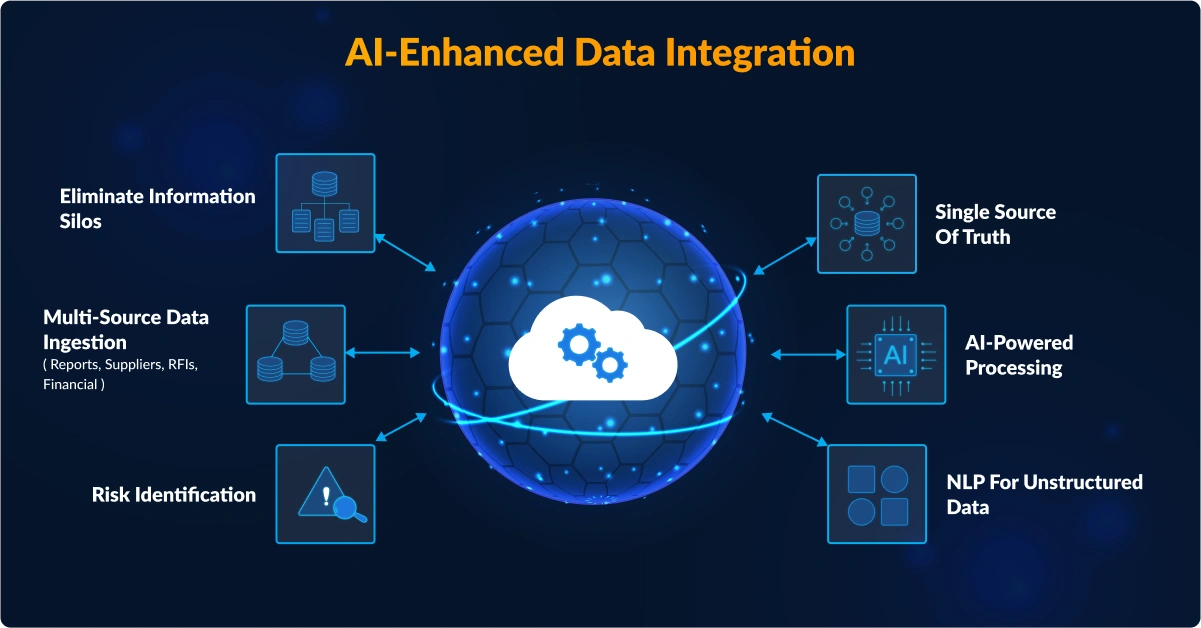
1. AI-Enhanced Data Integration The first principle is the elimination of information silos through intelligent data processing. A modern AI platform serves as the single source of truth by ingesting data from every project touchpoint: daily reports from foremen, material ETAs from supplier portals, RFI statuses, and even financial data.
Where AI adds value is in its ability to process and structure this vast amount of varied data. For instance, AI algorithms can utilize Natural Language Processing (NLP) to comprehend and categorize text-based notes in a daily report, identifying potential risks or issues that a simple database might overlook. This ensures all operational data, structured and unstructured, is integrated into a coherent and complete picture of the project’s health.
2. Real-Time Situational Analysis With an integrated data hub in place, the system provides real-time situational awareness. This moves beyond simple visibility. An AI-powered system doesn't just show you that a task is 20% behind schedule; it analyzes the context and calculates the significance of that deviation.
The AI model understands the complex web of dependencies and can instantly determine if this minor slippage on a non-critical task is trivial or if it poses a genuine threat to a major project milestone. This analytical capability allows managers to focus their attention on what is truly important, filtering out the operational noise.

3. Predictive Analytics and AI-Driven Forecasting This is the most transformative capability, where Machine Learning (ML), a subset of AI, comes into play. The AI platform is trained on vast datasets, including your company’s historical project data and broader industry benchmarks. By analyzing thousands of completed projects, the ML models learn to recognize complex patterns and correlations that are invisible to the human eye.
They understand how weather patterns impact productivity for different trades, how RFI response times correlate with specific types of delays, and which subcontractors have a history of over-promising.
This learned intelligence allows the system to generate highly accurate forecasts. It can predict the probability of a delay on the critical path, simulate the cascading impact of a potential material shortage, and identify hidden risks in the schedule's logic.
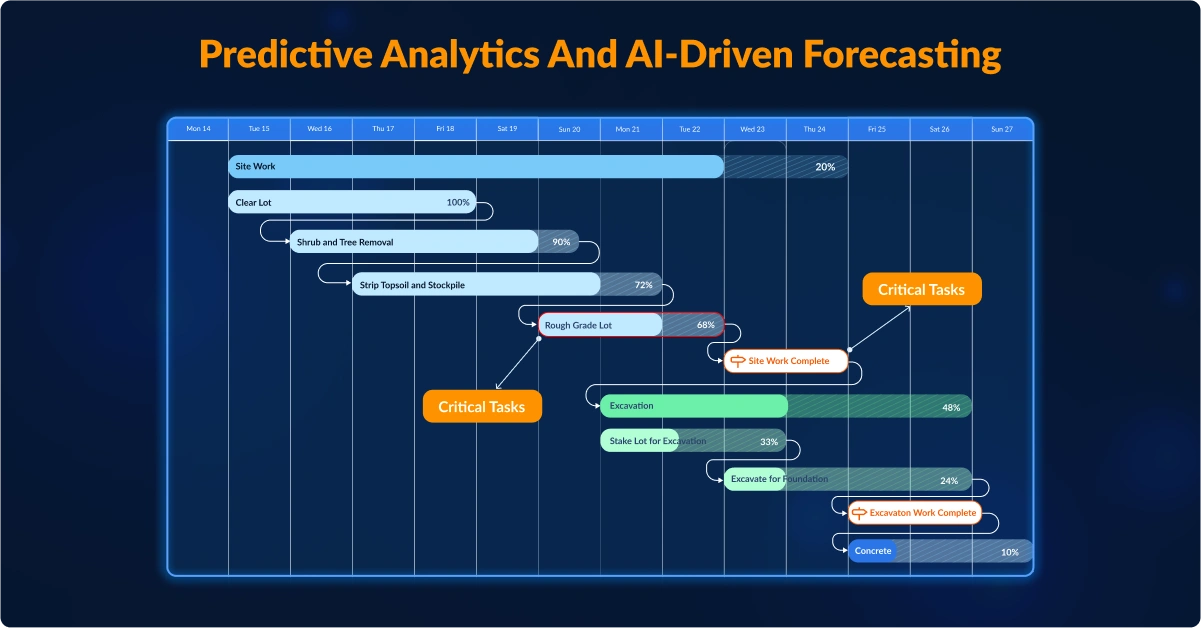
For example, the AI might flag that although all tasks are currently on track, the tight sequencing of three specific trades with a history of conflict creates an 85% probability of a bottleneck in three weeks. It can then run simulations to recommend an optimal re-sequencing of tasks to mitigate this predicted risk before it materializes.
The Strategic Outcome: From Reactive Management to Proactive Command
Adopting this AI framework fundamentally changes the role of your project management team and the dynamics of your operation.
The project manager is elevated from a reactive problem-solver to a proactive strategist. Instead of spending their day chasing information and manually adjusting a broken schedule, they are presented with AI-driven forecasts and a prioritized list of potential risks. Their time is reallocated from crisis management to high-value strategic decisions, including analyzing AI-generated scenarios, mitigating identified risks, and optimizing project workflows based on intelligent recommendations.
This results in a significant improvement in resource optimization. With a clear, forward-looking view of labor and equipment needs, you can make smarter allocation decisions, minimize costly idle time, and ensure that your most valuable assets are deployed with maximum efficiency.
Ultimately, this AI-driven approach builds a powerful new layer of predictability into your operations. When schedules are reliable and intelligently managed, trust is established with clients, subcontractors, and your crews. This trust translates into smoother projects, stronger partnerships, and a sterling reputation in the market. For the mid-sized GC, embracing the AI scheduling imperative is no longer an optional innovation; it is the essential foundation for scalable growth and sustained profitability in an increasingly competitive industry.


.webp)
.svg)

