





Despite a projected $91.2 billion in revenue for 2025 (IBISWorld), concrete contractors, long the bedrock of commercial and residential construction, are feeling the pressure rise well beyond the pour. Material logistics are increasingly unpredictable due to global supply chain disruptions and price volatility. On-site coordination remains complex, with tight schedules, overlapping trades, and limited room for error. Quality control and compliance expectations have become increasingly rigorous, even as the industry grapples with a shrinking skilled workforce. Add to that rising pressure to meet sustainability standards, and it’s clear: the traditional way of managing concrete firms and projects is no longer sustainable.
In this blog, we will explore how modern construction technology—and specifically, advanced project management software—is helping concrete professionals overcome these pain points. From real-time cost tracking and predictive analytics to smarter scheduling, communication, and environmental accountability, the tools now available are transforming how concrete companies enhance efficiency, manage projects, and achieve profitable margins.
Smarter Dollars, Stronger Decisions: Predictive Cost Control in Concrete
For concrete contractors navigating both commercial and residential markets, staying profitable has become more challenging than ever. With the cost of concrete materials rising by over 13% in recent years (U.S. Bureau of Labor Statistics) and labor shortages driving up wages, inaccurate cost estimates can quickly lead to blown budgets and shrinking margins. To stay ahead of competitors, concrete contractors are turning to smarter, data-driven systems to bring visibility and control to what has traditionally been one of the most unpredictable aspects of the construction industry.
Advanced construction management software, such as Linarc, enables real-time cost tracking, forecasting of financial and scheduling impacts and outcomes, and precise management of every dollar. These tools provide end-to-end financial visibility, transparency, and control for concrete contractors in the field.
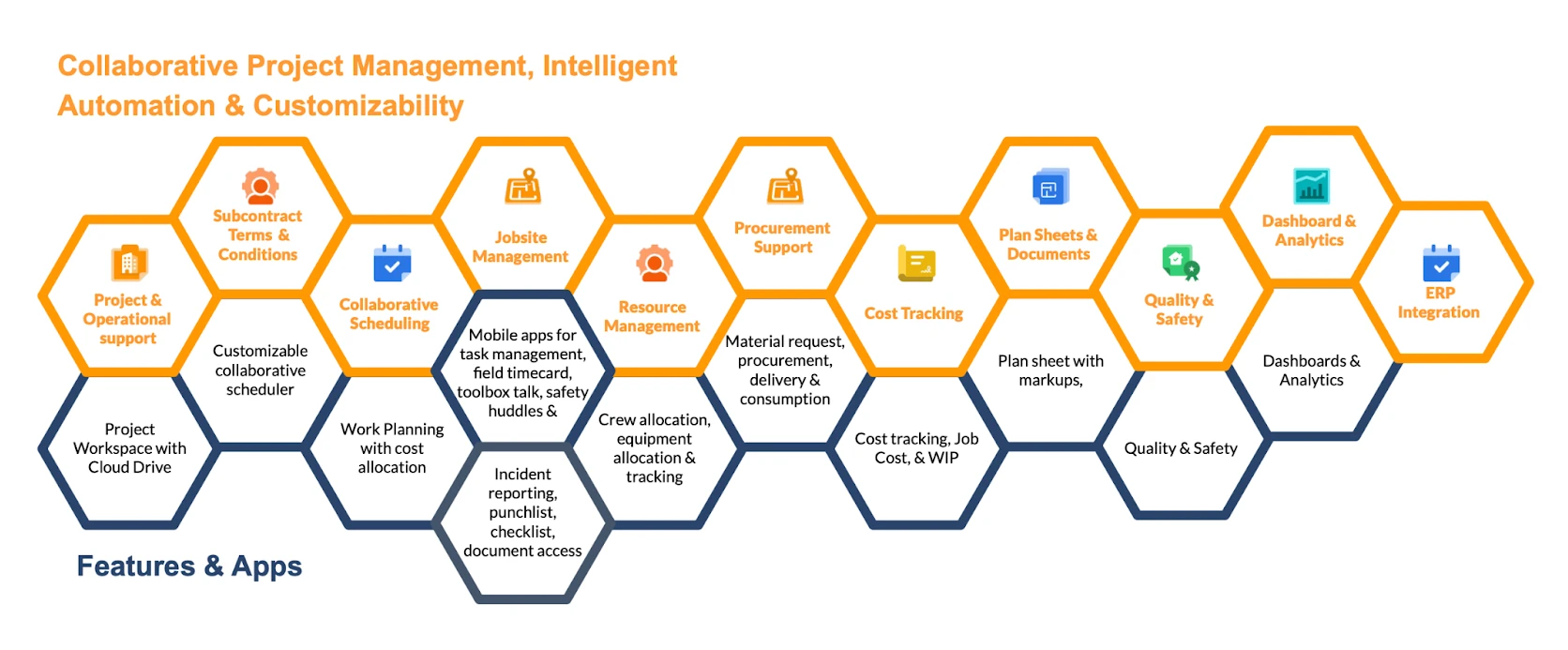
Software tools that are transforming financial workflows include:
- Automated Estimating & Change Order Management
- Track scope changes in real-time and generate updated estimates quickly to reflect evolving project demands, especially when commercial projects shift or residential clients request upgrades mid-project.
- Predictive Financial Forecasting
- Utilize historical data and real-time inputs to forecast the final cost at completion accurately. Platforms with machine learning capabilities analyze trends to alert contractors before budgets slip.
- Cash Flow Modeling & Risk Analysis
- Maintain steady cash flow with models that account for material lead times, subcontractor draw schedules, and payment cycles. This helps avoid the all-too-common cash crunch that affects many small to mid-sized concrete contractors.
- Integrated Progress Billing
- Tie billing directly to project milestones and quantities placed—crucial for concrete subs whose payments depend on cubic yards poured or square footage completed.
A 2024 report by CFMA highlighted that contractors utilizing integrated cost tracking tools were 25% more likely to complete projects on budget and 30% less likely to experience payment delays. In commercial sectors, where high vacancy rates have slowed office construction, budget discipline is more important than ever. Meanwhile, in residential work, where customizations and mid-project changes are common, concrete contractors need systems that can adapt quickly without compromising profitability.
By implementing real-time cost tracking and financial forecasting solutions, concrete contractors can reduce risk, protect their margins, get paid on time, and operate with confidence—even when a project throws a curveball.
Concrete Clarity: Syncing Schedules and Standards in Real Time
In concrete construction, precision timing isn't a luxury—it’s a requirement. Whether you're pouring a foundation for a custom home or coordinating with a Superintendent on a multi-phase commercial build, seamless communication is essential to hit milestones, avoid costly delays, and increase stakeholder confidence.
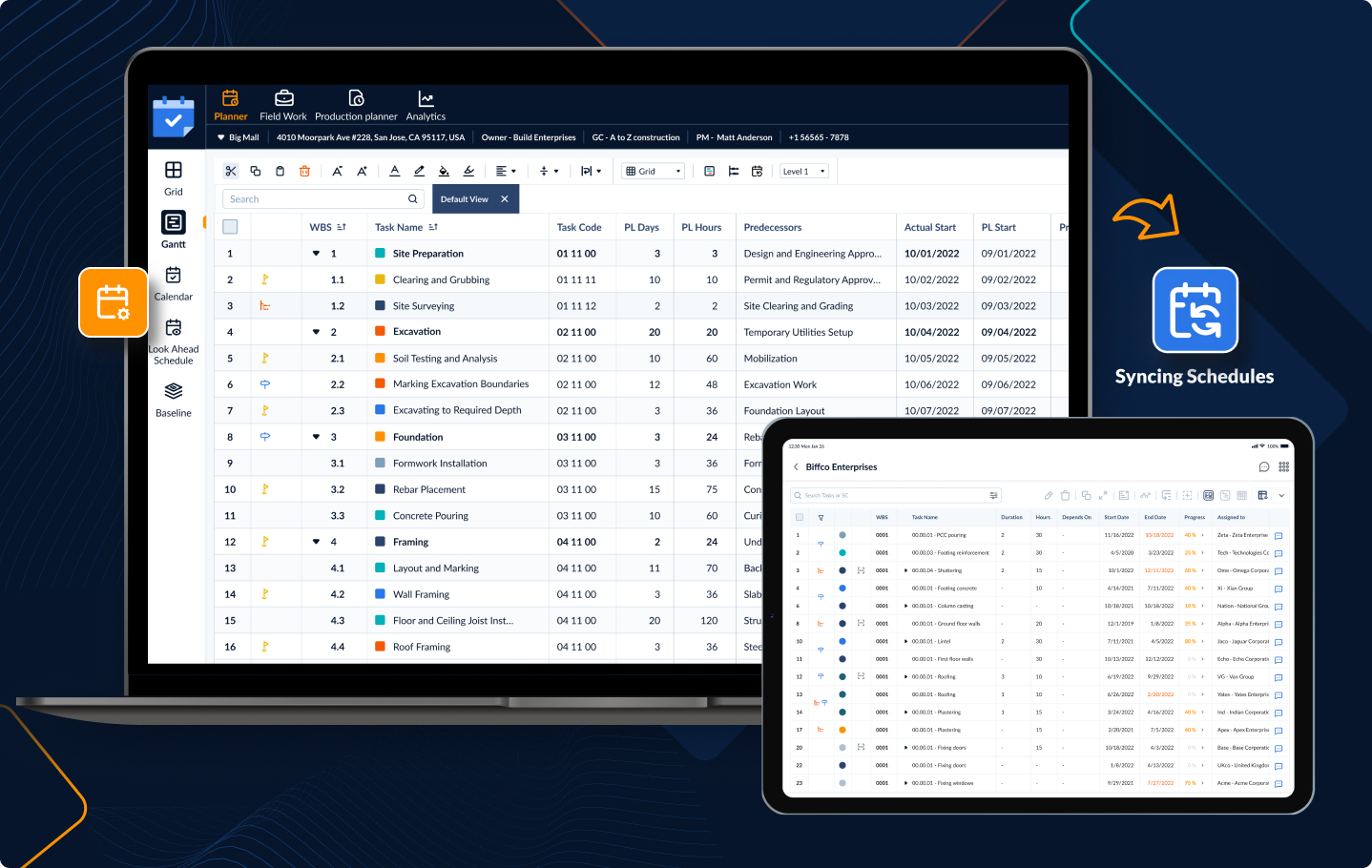
To keep crews aligned and work on schedule, concrete contractors are increasingly adopting real-time, cloud-based tools that link the jobsite with the office, suppliers, and general contractors. Connecting the field and the office with real-time channels of communication and updates. The result? Fewer surprises, faster decisions, and projects that stay on track.
Real-Time Visibility Without Leaving the Office
The days of waiting for end-of-day reports or chasing updates in person or via the phone need to become things of the past. In today’s complex and ever-demanding job sites, transparent, real-time communication is essential. Today’s jobsite platforms allow teams to share critical information instantly.
Key benefits include:
- Live Field Updates – Foremen and crews can log progress, take photos, record weather delays, and track material usage directly from their mobile devices.
- Office-Field Sync – Project managers can see what’s happening in real-time, enabling faster decisions and improved resource planning.
- Visual Documentation – Daily logs, inspection photos, and issue tracking reduce disputes and simplify compliance.
According to a CFMA White Paper, contractors who implemented real-time collaboration tools saw a 32% decrease in rework and significantly improved project coordination across trades.
Smart Scheduling That Keeps Concrete Crews Moving
Concrete schedules are tightly interlocked with other trades, material deliveries, and inspections. A missed window can ripple through the entire project. With connected scheduling tools, subcontractors can stay agile, even when plans shift.
What’s working well for concrete contractors:
- Integrated Task Dependencies – Schedule pours, curing, stripping, and inspections with confidence, avoiding schedule & trade conflicts or wasted time.
- On-Time Deliveries – Coordinate with suppliers to ensure that mix trucks arrive when and where they are needed, on schedule.
- Collaboration with GCs – Share schedules, updates, and RFIs in real time to stay aligned on changes or punch list items, and increase project confidence for all stakeholders.

Tools like Linarc’s collaborative platform are designed specifically for these kinds of workflows—connecting crews, project managers (PMs), and suppliers through a shared digital environment. By syncing schedules and standards in one system, concrete contractors minimize downtime and scheduling delays, enhance accountability, and maintain continuous concrete flow without disruption.
Pouring with Precision: AI and Predictive Analytics Reshaping Quality and Sustainability
In today’s construction environment, concrete contractors face growing pressure to meet tighter quality standards and align with sustainability goals—all while navigating fluctuating costs and workforce shortages. AI and predictive analytics are quickly becoming indispensable tools, helping concrete contractors not only plan more effectively but also build smarter and more efficiently.
With the ability to detect patterns across vast datasets and historical project data, AI is enhancing quality assurance by flagging inconsistencies in material performance, identifying the root causes of defects, and reducing the risk of structural or aesthetic issues. Whether it’s monitoring temperature and humidity during curing or analyzing past jobs to predict outcomes, predictive tools enable more precise and consistent results on every pour.
At the same time, contractors are expected to reduce waste, lower emissions, and improve overall environmental impact. AI contributes by analyzing mix designs for optimal material use, reducing over-ordering, and helping teams avoid excessive rework, one of the most significant sources of waste in concrete construction.
Leading concrete contractors are leveraging AI to:
- Improve concrete mix designs to reduce carbon-intensive cement content
- Detect anomalies in material behavior before defects occur
- Minimize waste through more accurate ordering and usage forecasting
- Forecast curing durations based on weather and mix variables (concrete can’t set correctly in freezing temperatures)
- Track performance across jobs to refine sustainability practices
- Reduce rework by identifying potential issues earlier in the process
As sustainability regulations tighten and clients demand more accountability, AI becomes more than a tech trend—it’s a strategic tool for meeting compliance and performance benchmarks.
Tools like Linarc’s construction management software integrate quality and environmental tracking features directly into daily workflows, allowing subcontractors to stay ahead of both regulatory expectations and client demands.
The result? Better buildings, less waste, and stronger reputations for quality and responsibility—without compromising profitability.
Conclusion
Concrete subcontractors today are balancing more than ever; they’re navigating a complex mix of rising costs, supply chain issues, labor shortages, quality demands, and environmental responsibilities. However, as we have seen, these pressures are not roadblocks—they are catalysts for more innovative, tech-enabled construction.
According to a recent McKinsey report, construction firms that use digital tools report a 15% increase in productivity and a reduction of up to 9% in project costs. From predictive analytics that improve quality control and resource planning, to real-time cost tracking and cloud-based communication that bridges field and office, these tools exist to meet these challenges head-on. And they’re already delivering results: increased productivity, reduced delays, and stronger financial performance.
The takeaway? Success in this evolving and competitive market won’t come from doing more with less—it will come from working smarter with better, more streamlined tools. For concrete professionals ready to pour with precision and lead with innovation, embracing construction technology isn’t just a strategic move—it’s a solid investment in the future.
Looking to optimize your concrete business? Explore leading construction management software solutions today to take your operations to the next level!
Want to learn more about Linarc’s construction project management software? Schedule a demo today.

.webp)
.svg)

